Coaching
June 12, 2023
nutrition coaching for athletes
Your training is strong, but your nutrition sucks
Get nutrition coaching that makes sense.
You’ve tried everything (even other coaches).
You’re frustrated, and the only successful routine you’ve developed is hopping on this continuous cycle of starting over and over… and over again.
You know exactly what you need to do.
But you seem to find yourself… not doing it. It sounds so easy. It’s almost annoying. You know you’re capable of so much more.
You want to enjoy food again.
Or at least not obsess over it 24 hours a day. You want to be able to go to a restaurant and enjoy the company, rather than feel stressed out.
I thought I could do it all on my own, too.
Hell, I even got a degree in Nutrition and Food.
But knowing something… isn’t the same as actually doing it.
Most athletes don’t need more information.
They need a way to apply what they know when life gets busy and motivation burns out.
When I got a powerlifting coach, I increased my total to 42.5 kg in less than 4 months (psst.. and it’s still increasing!). When I implemented my own coaching method, I increased my maintenance calories by 500 in less than 6 months.
It wasn’t even because I knew what to do. It was because I took action. And now I coach athletes from “I know what to do” to “I’m finally doing it.”
Now you don’t have to waste time
trying to do it all on your own.
Greg Goana
93 kg CANPL Powerlifter
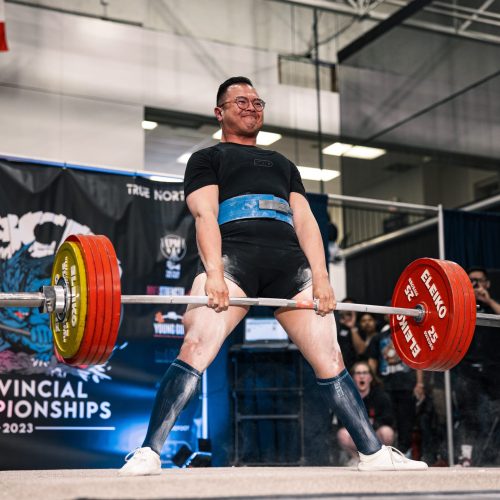
“I don’t feel guilty for eating foods that might be labelled “not healthy” anymore, and Maria has shown me how I can continue to eat the food I love and crave while continuing to work towards my goals.”
Eating out is inevitable — yes, we can probably minimize it during meet preps but what about the social occasions and off-season period where we want to build more? And when it comes to eating out, it’s usually a combination of a new environment, new food choices and the difficulty with tracking food intake.
So what better way to adjust our perspective to eating out than build our experience? I programmed eating out and tracking those meals. He gained exposure to it w/ guidance. We built up his confidence and comfort. And his perspective of food and nutrition changed.
He got his QT AND he enjoys food. I call that a massive win.
Melody Russell
57 / 63 / 69 kg Canpl Powerlifter
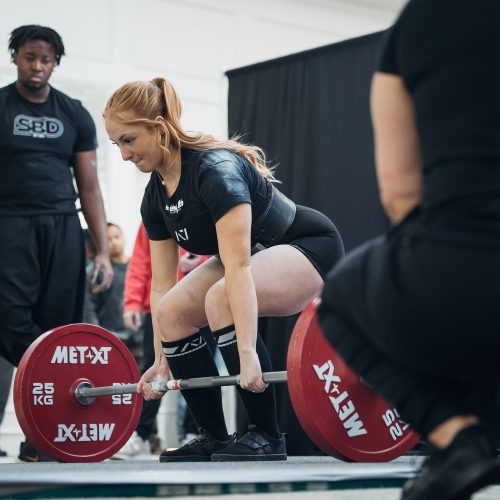
“Maria helped me achieve something I had not been able to on my own after years of trying.”
Mel and I had sessions every week to keep her accountable and adherent and ensure that the weight loss wasn’t negatively impacting her performance. We went from discussing potential short-term weight-cutting strategies on a meet week to actually increasing her carbohydrate intake and only fasting the night before to make weight.
She competed 3 more times since TMU and overt time we’ve been working on increasing her maintenance calories while dropping another weight class. Mel is eating an average of 30-45% more calories at a lower weight class.
Johnson Nguyen
83 KG CANPL POWERLIFTER
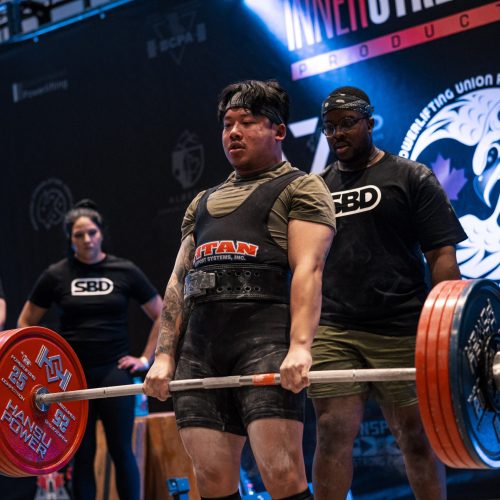
“Before working with TEM, I drank 4 scoops of protein a day and ate next to zero veggies. Now I eat way more balanced with diverse protein sources.”
He wanted to build a strong nutrition foundation, focusing on improving his micronutrient intake, meal planning skills, and regular eating habits. And he wanted to do all this while filling out his weight class, 83.0 kg.
Starting at 79.10-80.80 kg, Johnson was comfortable with tracking calories/macros but he hadn’t paid much attention to his nutrition over the past 5 years in the sport. So we later noticed that he struggled with inconsistent protein intake (126-169 g) and incomplete food logs.
We transitioned Johnson to Hand Food Portions, making completing food logs easier. We introduced tasty, nutrient-rich recipes, planned travel strategies, and improved his food intake (specifically working on his protein, fruits, and veggie intake). We also worked on his meal planning skills, especially because this was going to be crucial in establishing a regular eating routine.
In roughly 10 months, Johnson started to maintain 84.4-85.0 kg, consistently hitting 7.5-8.5 portions of protein and 4-4.5 portions of veggies daily.
Greg Goana
93 kg CANPL Powerlifter
“I don’t feel guilty for eating foods that might be labelled “not healthy” anymore, and Maria has shown me how I can continue to eat the food I love and crave while continuing to work towards my goals.”
Eating out is inevitable — yes, we can probably minimize it during meet preps but what about the social occasions and off-season period where we want to build more? And when it comes to eating out, it’s usually a combination of a new environment, new food choices and the difficulty with tracking food intake.
So what better way to adjust our perspective to eating out than build our experience? I programmed eating out and tracking those meals. He gained exposure to it w/ guidance. We built up his confidence and comfort. And his perspective of food and nutrition changed.
He got his QT AND he enjoys food. I call that a massive win.
Melody Russell
57 / 63 / 69 kg Canpl Powerlifter
“Maria helped me achieve something I had not been able to on my own after years of trying.”
Mel and I had sessions every week to keep her accountable and adherent and ensure that the weight loss wasn’t negatively impacting her performance. We went from discussing potential short-term weight-cutting strategies on a meet week to actually increasing her carbohydrate intake and only fasting the night before to make weight.
She competed 3 more times since TMU and overt time we’ve been working on increasing her maintenance calories while dropping another weight class. Mel is eating an average of 30-45% more calories at a lower weight class.
Johnson Nguyen
83 KG CANPL POWERLIFTER
“Before working with TEM, I drank 4 scoops of protein a day and ate next to zero veggies. Now I eat way more balanced with diverse protein sources.”
He wanted to build a strong nutrition foundation, focusing on improving his micronutrient intake, meal planning skills, and regular eating habits. And he wanted to do all this while filling out his weight class, 83.0 kg.
Starting at 79.10-80.80 kg, Johnson was comfortable with tracking calories/macros but he hadn’t paid much attention to his nutrition over the past 5 years in the sport. So we later noticed that he struggled with inconsistent protein intake (126-169 g) and incomplete food logs.
We transitioned Johnson to Hand Food Portions, making completing food logs easier. We introduced tasty, nutrient-rich recipes, planned travel strategies, and improved his food intake (specifically working on his protein, fruits, and veggie intake). We also worked on his meal planning skills, especially because this was going to be crucial in establishing a regular eating routine.
In roughly 10 months, Johnson started to maintain 84.4-85.0 kg, consistently hitting 7.5-8.5 portions of protein and 4-4.5 portions of veggies daily.
I know you’re thinking about it
Yet doubts are creeping at the back of your head.
I get it, you need to be smart with your choices (especially with the economy these days!).
“I’m already tracking, what else could a coach possibly tell me?”
Tracking is a tool, not a solution. If you’re still not making progress, it’s not about logging more — it’s about knowing what the data means and how to actually use it. I don’t just tell athletes to “hit their macros.” I show them how to adjust intake based on training blocks, weight class goals, recovery demands, and real-life stress. That’s strategy — not just numbers.
“What if I spend all this money and I still don’t feel any different?”
Totally valid — investing in yourself is a risk. But so is staying stuck.. and the worst part is, time will pass anyway. And even though I may not be able to guarantee your goals, I can wholeheartedly tell you that you will walk away (if ever) from TEM coaching as a different person.
“I already know what I should be doing — I just don’t do it.”
That’s great to hear (the first part, anyway). The second part is where I come in. My job is close the gap between knowing and doing, by making doing actually work in your life.
“I don’t want to track forever.”
Good, you’re not supposed to. Tracking is a tool, not a lifestyle. I teach athletes how to use tracking strategically — to understand patterns, identify blind spots, and then learn how to eat without it. It’s not forever. It’s a stepping stone. The goal is always autonomy.
“I’m not elite or competitive, so I don’t think this is for me.”
You don’t need a meet on the calendar to care about performance. If you lift consistently and care about becoming a stronger version of yourself, you’re already an athlete. I know you may see several international athletes throughout my website, but the truth is.. I coach people who live real lives (some just happen to compete internationally!). Nutrition matters whether you’re prepping for nationals or training after work.
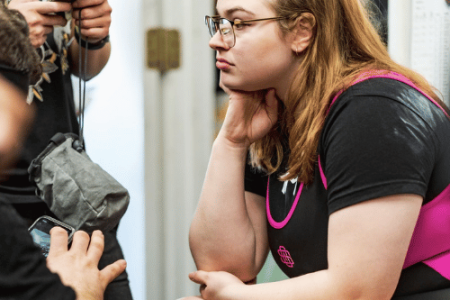
Olivia thought feeling bloated was just part of training hard.
She trained through gut issues for years thinking it was normal. Coaching helped her identify patterns, tweak food choices and timing, and actually digest her food. Now she thrives in training.
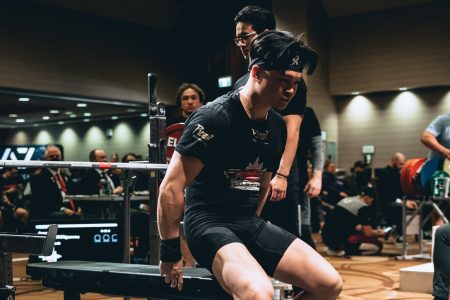
Cam thought his body composition would eventually catch up to his training.
Cam was strong but always felt flat and undersized. He thought tracking was too intense until we found a simple system that worked for his schedule. He gained muscle, confidence, and learned how to fuel long-term.
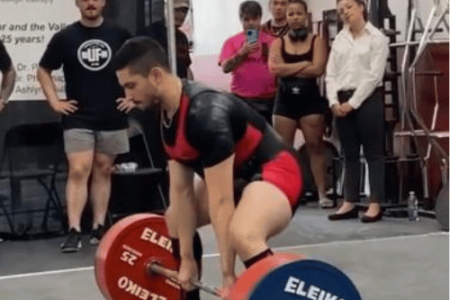
Edwin thought eating fast food was the only way to gain weight.
He tried to bulk with takeout and cut with chaos. With coaching, we added structure without stress, and he filled his weight class while feeling better than ever on the platform.
You’re in the right place
Everyone starts at Pro.
$225.00 (CDN) or $165.00 (USD) per month
More than a program
It’s a whole damn toolbox.
Get what you need.
By this point, you would’ve…
→ Completed the Nutrition Assessment
→ Received your first protocol, Food Record
→ Completed your Food Record (min. 3 days but 7 days preferred)
→ Had access to all TEM resources and our coaching app
And I would’ve..
→ Had a better understanding of where you’ve been, where you are currently and where you want to go in the next 6 months
→ Had analyzed your Food Record and identified any patterns and room for improvement (ex. vulnerable nutrient intakes)
By the end of our session…
→ You would receive your first Personalized Nutrition Program
→ Our next Check-In would be booked in 2 weeks to ensure we’re on the best track possible (plus, we’re also just getting to know each other!)
Your Personalized Nutrition Program may include..
→ A specific framework that promotes behavior change (it relates daily actions to practices, skills and your big nutrition goal)
→ Food and nutrient targets, depending on what’s best for you at the time
→ Supplement chart, if applicable
→ Meal guide, if applicable
→ Personalized recipe collections, if applicable and requested
→ Other resources that could help you achieve your daily tasks
And the best part is..
Your Personalized Nutrition Program changes with you. This means that regardless of when our upcoming Check-In is, if something needs to change, it will. I personally don’t feel right leaving you with a useless protocol for the sake of “structure”. Life happens, and nutrition needs to adapt with it. That’s how we make it sustainable here.
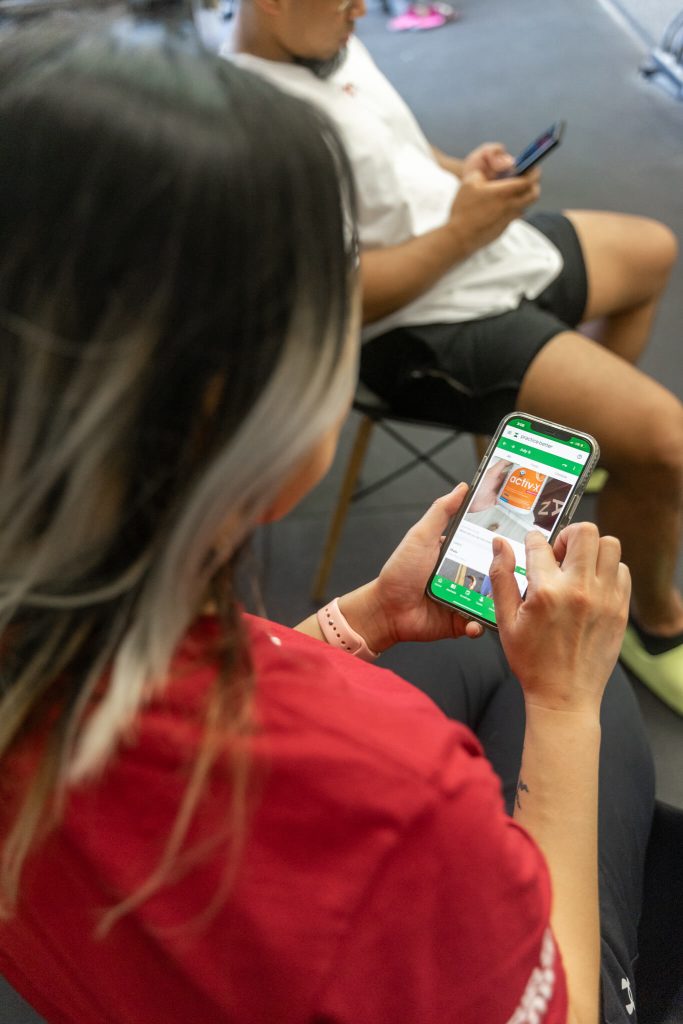
This is where we get to dive into your thoughts, feelings, experiences and the data you’ve collected since our last discussion. Think of it like one of your deep talks with your friend. Before your Check-In session, you’ll receive a Check-In form which gives direction to our discussion.
Here are some possible topics we may cover…
→ How was it implementing the tasks and strategies that we discussed last time?
→ What wins or breakthroughs you’ve had since we last talked?
→ How are your sleep, recovery, or stress levels?
→ How were your training sessions (energy, performance, consistency)?
→ Adjustments needed based on travel, shift work, life changes
These sessions help us spot patterns, troubleshoot early, and make changes that actually stick. I want to hear everything, even the “stupid questions”.
This is the place to be to learn more about general and performance nutrition on your own time.
→ The Resource Pantry is a thoughtfully curated collection of nutrition resources designed to to help you navigate the fundamentals of nutrition, troubleshoot challenges, or explore specific dietary approaches using clear, evidence-based insights.
→ The Powerlifting Toolkit is a collection of nutrition and nutrition-related resources for competitive powerlifters. These resources are tailored to address powerlifters’ unique nutritional needs and challenges during training, competition, and recovery.
→ The Recipe Collection is a practical library of easy-to-follow, athlete-friendly meals that actually make sense for your life. Whether you’re someone who loves cooking or just needs to get food on a plate, this is for you.
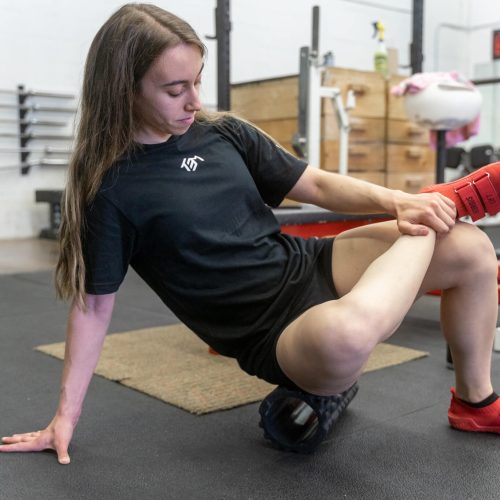
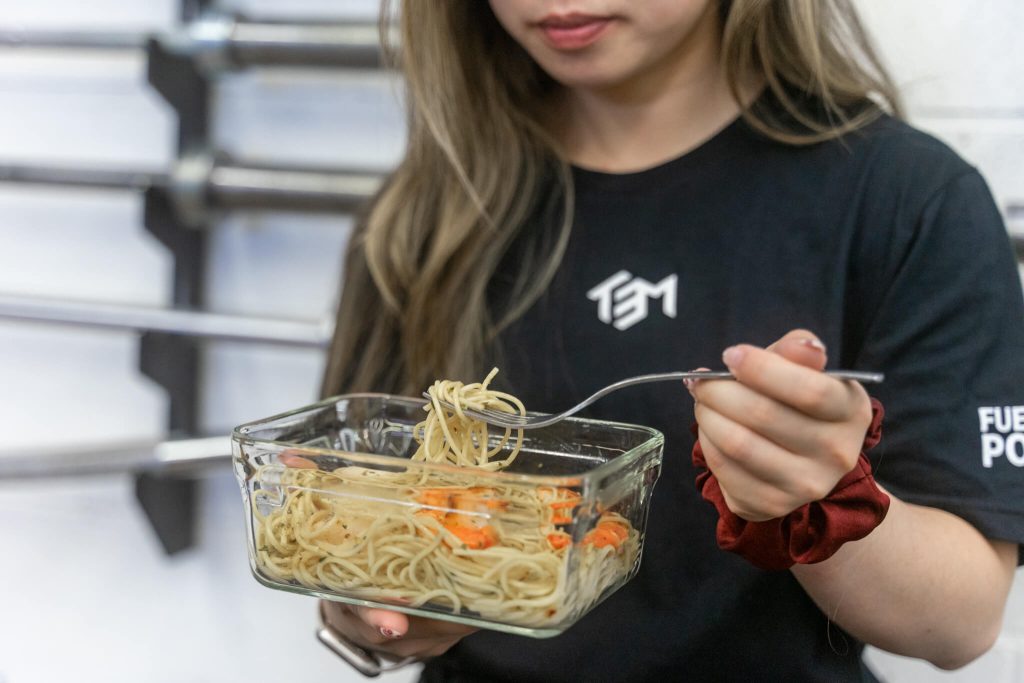
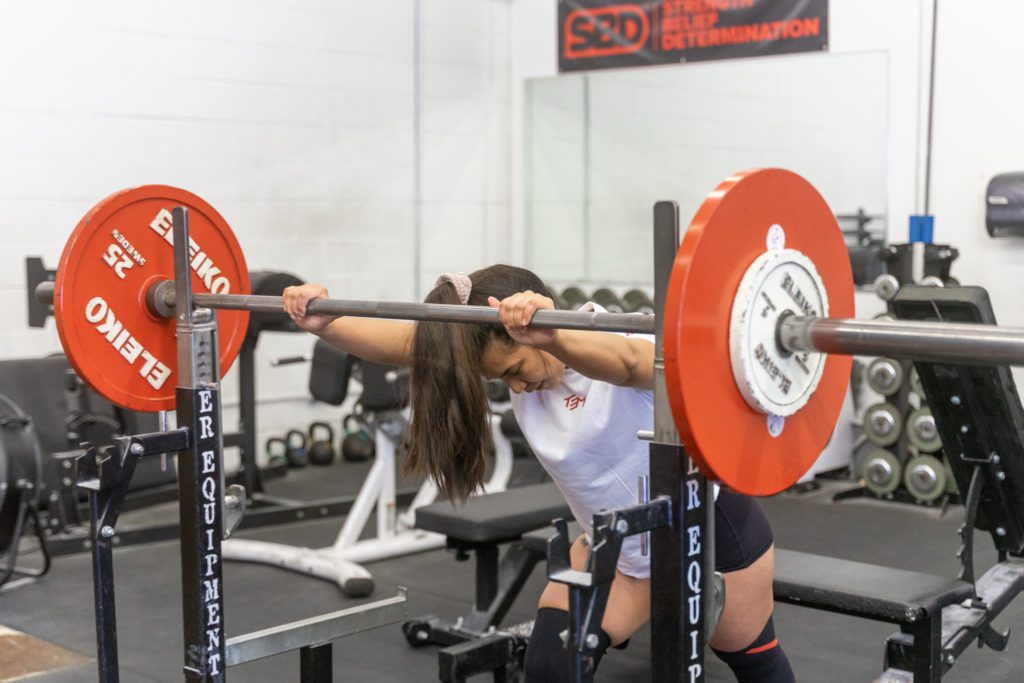
The week of your event is not the time to just “wing it”. It doesn’t matter if it’s your first competition or it’s just for fun. You need a personalized nutrition strategy that removes the guesswork and supports you throughout the entire event. I always tell my athletes, if you feel like shit by the end of your competition, something needs to change.
Here are some examples of sport-specific protocols:
→ Meet Week & Day
→ Meet Prep Add-On
→ Run Week & Day
The Add-Ons are the Sport-Specific Sessions / Recaps / Responses. At the Pro tier, we would meet before and after a Sport-Specific Event such as a competition to better get in the head of the game followed by a recap and brainstorming session of what to do next. At the Lite and Base tier, these would be in a written format instead of a session.
You’ll have ongoing access to me through our coaching platform’s messenger for questions, updates, and support—whether it’s midweek or mid-meal. I respond during coaching hours (typically 7 AM to 7 PM), so you’re never left hanging. Mind you, the longest time I’ve left an athlete’s message was 48 hours and that was by total accident! On competition day, you’ll have direct WhatsApp access for quick responses when it matters most.
By this point, you would’ve…
→ Completed the Nutrition Assessment
→ Received your first protocol, Food Record
→ Completed your Food Record (min. 3 days but 7 days preferred)
→ Had access to all TEM resources and our coaching app
And I would’ve..
→ Had a better understanding of where you’ve been, where you are currently and where you want to go in the next 6 months
→ Had analyzed your Food Record and identified any patterns and room for improvement (ex. vulnerable nutrient intakes)
By the end of our session…
→ You would receive your first Personalized Nutrition Program
→ Our next Check-In would be booked in 2 weeks to ensure we’re on the best track possible (plus, we’re also just getting to know each other!)
Your Personalized Nutrition Program may include..
→ A specific framework that promotes behavior change (it relates daily actions to practices, skills and your big nutrition goal)
→ Food and nutrient targets, depending on what’s best for you at the time
→ Supplement chart, if applicable
→ Meal guide, if applicable
→ Personalized recipe collections, if applicable and requested
→ Other resources that could help you achieve your daily tasks
And the best part is..
Your Personalized Nutrition Program changes with you. This means that regardless of when our upcoming Check-In is, if something needs to change, it will. I personally don’t feel right leaving you with a useless protocol for the sake of “structure”. Life happens, and nutrition needs to adapt with it. That’s how we make it sustainable here.
This is where we get to dive into your thoughts, feelings, experiences and the data you’ve collected since our last discussion. Think of it like one of your deep talks with your friend. Before your Check-In session, you’ll receive a Check-In form which gives direction to our discussion.
Here are some possible topics we may cover…
→ How was it implementing the tasks and strategies that we discussed last time?
→ What wins or breakthroughs you’ve had since we last talked?
→ How are your sleep, recovery, or stress levels?
→ How were your training sessions (energy, performance, consistency)?
→ Adjustments needed based on travel, shift work, life changes
These sessions help us spot patterns, troubleshoot early, and make changes that actually stick. I want to hear everything, even the “stupid questions”.
This is the place to be to learn more about general and performance nutrition on your own time.
→ The Resource Pantry is a thoughtfully curated collection of nutrition resources designed to to help you navigate the fundamentals of nutrition, troubleshoot challenges, or explore specific dietary approaches using clear, evidence-based insights.
→ The Powerlifting Toolkit is a collection of nutrition and nutrition-related resources for competitive powerlifters. These resources are tailored to address powerlifters’ unique nutritional needs and challenges during training, competition, and recovery.
→ The Recipe Collection is a practical library of easy-to-follow, athlete-friendly meals that actually make sense for your life. Whether you’re someone who loves cooking or just needs to get food on a plate, this is for you.
The week of your event is not the time to just “wing it”. It doesn’t matter if it’s your first competition or it’s just for fun. You need a personalized nutrition strategy that removes the guesswork and supports you throughout the entire event. I always tell my athletes, if you feel like shit by the end of your competition, something needs to change.
Here are some examples of sport-specific protocols:
→ Meet Week & Day
→ Meet Prep Add-On
→ Run Week & Day
The Add-Ons are the Sport-Specific Sessions / Recaps / Responses. At the Pro tier, we would meet before and after a Sport-Specific Event such as a competition to better get in the head of the game followed by a recap and brainstorming session of what to do next. At the Lite and Base tier, these would be in a written format instead of a session.
You’ll have ongoing access to me through our coaching platform’s messenger for questions, updates, and support—whether it’s midweek or mid-meal. I respond during coaching hours (typically 7 AM to 7 PM), so you’re never left hanging. Mind you, the longest time I’ve left an athlete’s message was 48 hours and that was by total accident! On competition day, you’ll have direct WhatsApp access for quick responses when it matters most.
The toolbox works, no doubt.
So what happens next?
Here’s what to expect after applying
welcome
After looking over your application, you’ll receive an invite to book your Discovery Call. However, if my roster has been filled, you’ll receive an email for your next steps.
CHECK THE VIBE
During our Discovery Call, we’ll have a rough discussion of what to expect and what we’re looking for from the both of us. Let’s make sure we’re both on the same page.
Sign the Agreement
Congratulations, you’re one step away from being a TEM Athlete! This ensures that we’re both covered on the legal side of things. We’re legal here.
Thao Nguyen
63 kg USAPL Powerlifter
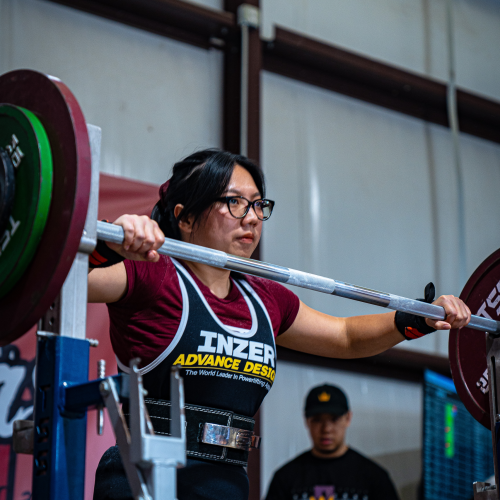
“TEM helped me build healthy habits that I struggled to do myself like cooking and enjoying the food that I eat while still reaching my goals.”
After a negative experience with a previous cut, which left her feeling drained and struggling with painful periods, she knew she needed a better approach. Her goal? To cut weight w/o losing strength and to feel confident navigating food choices while still thriving in powerlifting.
When she started with TEM, she was maintaining her weight at 64.5-65.0 kg on 1850-1950 calories, but poor stress and time management were holding her back. Together, we focused on improving her sleep, simplifying meal prep, and introducing enjoyment into her routine. No drastic calorie cuts—just strategic adjustments, like reducing her protein slightly to eliminate that feeling of restriction.
Over 28 weeks, she followed our strategy that included two careful calorie deficits and a reverse into competition. We reduced her calories by 8.5%, and her weight dropped to 62.9-63.0 kg, while slightly increasing her maintenance calories (1975-2000). Through it all, her strength remained intact. She learned how to manage nutrition on vacation, sleep better, and even felt “buff” in the process!
The scale went down, but her strength didn’t. She’s more confident, sleeps better, and manages stress like a pro. Her meal-prepping skills? Leveled up.
Brianna Townsend
90 kg USAPL Powerlifter
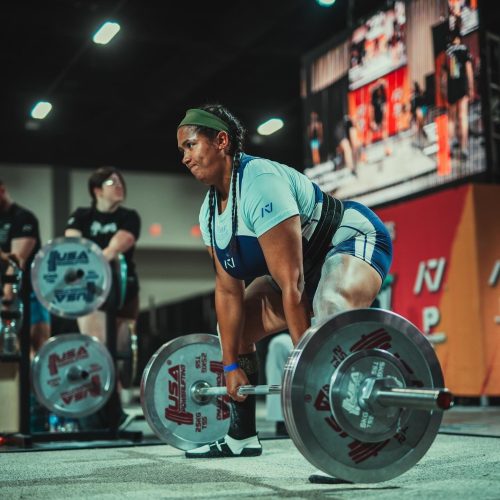
“I really enjoyed working with Maria, she was so thoughtful in all aspects of her coaching. Not only did she help me find a good balance with food but she also provided me with a plan for difficult situations and was also ways willing to listen if I was having a tough day.”
After learning about her health, food and nutrition habits, we knew there was a lot of work to do. At the time, she was eating ~1395 calories while maintaining ~96.76 kg, working on a ship and struggling with energy levels in the middle of the day.
But we didn’t just increase her calories willy-nilly. We increased food awareness, self-trust and confidence. And improvements in performance followed.
By her competition week (we did several together), she was eating an average of ~1910 calories while weighing in at ~89.44 kg. In this prep, she was eating 290 more calories while weighing 0.84 kg less. The best part is that she was still hitting PRs in training and in the competition.
She’s now eating ~2090 calories while weighing in at ~89.4 kg.
Thao Nguyen
63 kg USAPL Powerlifter
“TEM helped me build healthy habits that I struggled to do myself like cooking and enjoying the food that I eat while still reaching my goals.”
After a negative experience with a previous cut, which left her feeling drained and struggling with painful periods, she knew she needed a better approach. Her goal? To cut weight w/o losing strength and to feel confident navigating food choices while still thriving in powerlifting.
When she started with TEM, she was maintaining her weight at 64.5-65.0 kg on 1850-1950 calories, but poor stress and time management were holding her back. Together, we focused on improving her sleep, simplifying meal prep, and introducing enjoyment into her routine. No drastic calorie cuts—just strategic adjustments, like reducing her protein slightly to eliminate that feeling of restriction.
Over 28 weeks, she followed our strategy that included two careful calorie deficits and a reverse into competition. We reduced her calories by 8.5%, and her weight dropped to 62.9-63.0 kg, while slightly increasing her maintenance calories (1975-2000). Through it all, her strength remained intact. She learned how to manage nutrition on vacation, sleep better, and even felt “buff” in the process!
The scale went down, but her strength didn’t. She’s more confident, sleeps better, and manages stress like a pro. Her meal-prepping skills? Leveled up.
Brianna Townsend
90 kg USAPL Powerlifter
“I really enjoyed working with Maria, she was so thoughtful in all aspects of her coaching. Not only did she help me find a good balance with food but she also provided me with a plan for difficult situations and was also ways willing to listen if I was having a tough day.”
After learning about her health, food and nutrition habits, we knew there was a lot of work to do. At the time, she was eating ~1395 calories while maintaining ~96.76 kg, working on a ship and struggling with energy levels in the middle of the day.
But we didn’t just increase her calories willy-nilly. We increased food awareness, self-trust and confidence. And improvements in performance followed.
By her competition week (we did several together), she was eating an average of ~1910 calories while weighing in at ~89.44 kg. In this prep, she was eating 290 more calories while weighing 0.84 kg less. The best part is that she was still hitting PRs in training and in the competition.
She’s now eating ~2090 calories while weighing in at ~89.4 kg.
Frequently Asked Questions
You’ve got questions? I have answers!
If you can’t find your question below, head to the Contact page.
Not at the moment. I have had athletes with health insurance that cover a wide range of health and fitness fees (i.e. health care spending account). In that case, you can attempt to claim it manually by sending your insurance provider a copy of the invoice (always available to you in the client portal).
Do you offer guaranteed results or a refund policy?
To be completely transparent, I cannot guarantee results because it is completely up to you to listen and implement the strategies discussed. Coaching is a collaborative approach to moving forward productively. I also do not offer refunds because work does begin (and doesn’t stop) as soon as athletes are onboarded.
Do you offer discounted coaching services?
Sometimes, I will run promotions throughout the year, although it has primarily been the Nutrition Consultations only. As for Lite / Pro Coaching, there’s already a discount when an athlete signs a 6- or 12-month commitment.
Do you only work with powerlifters?
I used to primarily work with powerlifters, but overtime, I have opened up my rosters to other athletes because I’ve realized that you don’t need to be a powerlifter to have the same level of discipline, commitment and drive to improve your nutrition. In the past, I have worked with marathon runners, hybrid athletes and athletes in combat sports and crossfit.
I only need calorie and macro targets. Can you help?
You’re not looking for a coach. You’re looking for a calculator. This a friendly reminder that nutrition runs deeper than calories and macros. The successful athletes you’ve seen on the platform are doing more than reaching their nutrient targets.
When can I expect to see or feel results?
I cannot provide an accurate timeline for anyone (even my current athletes included). But I will say that results take time and patience. It’s a process more than it is the outcome.
What makes you different from other coaches?
I won’t speak for other coaches; however, you’ll find that many TEM athletes will tell you that TEM provides flexibility in nutrition programs while instilling a commitment to the big goals. TEM considers factors that profoundly affect nutrition, such as mindset and attitude. TEM is the next level to your regular macro-coach.
Can I switch coaching tiers / services later?
Note that Pro athletes can switch to Lite only after 4 consecutive months. This ensures that the athlete is developed significant skills to be more independent. The same requirement applies to the Base tier.