Successful Nutrition for Powerlifters: Fueling More Than Power
October 10, 2024
Powerlifting used to be straightforward, you lift as heavy as possible and call it a day. Now, with powerlifters analyzing the numbers and finetuning programs, being strong is simply not enough. It’s not enough to just head to the gym and it’s no longer impressive to stay at the gym for 4+ hours. You’ll need a well-rounded and sustainable nutrition strategy to maximize your performance, recovery, and longevity in the sport. Let’s break down the core elements of powerlifting nutrition to ensure you’re fueling your body effectively.
Table of Contents
Your Nutrition Matters in Powerlifters
Powerlifting is a unique sport that combines maximum strength with precision and recovery. It takes less than a minute to complete a lift on the platform but takes months to years to succeed in that minute. While training and technique are crucial, your nutrition can make or break your performance. It’s not just about meeting macronutrient goals; it’s about ensuring your body is properly fueled, recovering well, and ready to perform at its best on AND off the platform.
In this blog post, we’ll cover the basics of powerlifting nutrition so you can improve your performance and recovery, avoid burnout, and set yourself up for long-term success.

Eat for MORE than Performance
As a competitive powerlifter, eating enough consistently is foundational for your overall health and performance. Many people will talk about macronutrients, micronutrients, supplement regimens, “ideal” eating patterns, and “optimal” food choices. And so we have powerlifters going beyond their current capabilities, burning out and hating the nutrition/food aspect of the sport. I’m not disregarding that all those traditional terms have no role in powerlifting nutrition, but I’m shifting focus to level 0 — the basics of powerlifting nutrition.
- Performance: Focus on eating enough protein for muscle recovery, consuming enough carbs to fuel your workouts, and ensuring you get healthy fats for hormone regulation and joint health.
- Health: Ensure you’re getting enough vitamins and minerals from whole foods, and eating a variety of nutrient-dense foods that contribute to overall well-being. As well as eating enough calories (food) in general to ensure optimal body functions.
Balance is key.
It’s not just about hitting that PR, it’s about being able to continue and do better each time.
Think Consistency, but Don’t Forget Sustainability
Many powerlifters fall into the trap of yo-yo dieting or unsustainable nutrition practices, especially around competitions. This might look like resorting to very low-calorie/carb diets for weeks followed by eating large amounts of food before an SBD day. While reducing body weight in an attempt to improve GLP or DOTS, these approaches often lead to poor performance on the platform, burnout, and rebound weight gain.
Build a nutrition routine that you can stick with long-term. This means finding a way to eat that supports your training cycle and is flexible enough to handle life’s changes. Successful powerlifters are the ones who can navigate environmental changes—whether it’s a shift in training intensity, a busy work schedule, or even travel—while maintaining their nutrition consistency.
Focus on a steady approach to nutrition, rather than crash diets or extreme calorie deficits.
In the long run, consistency must coexist with sustainability.
Track your Nutrition and Body Weight
One of the most effective ways to dial in your nutrition is by tracking what you eat and how your body responds. But this doesn’t have to be a stressful or overly rigid process.
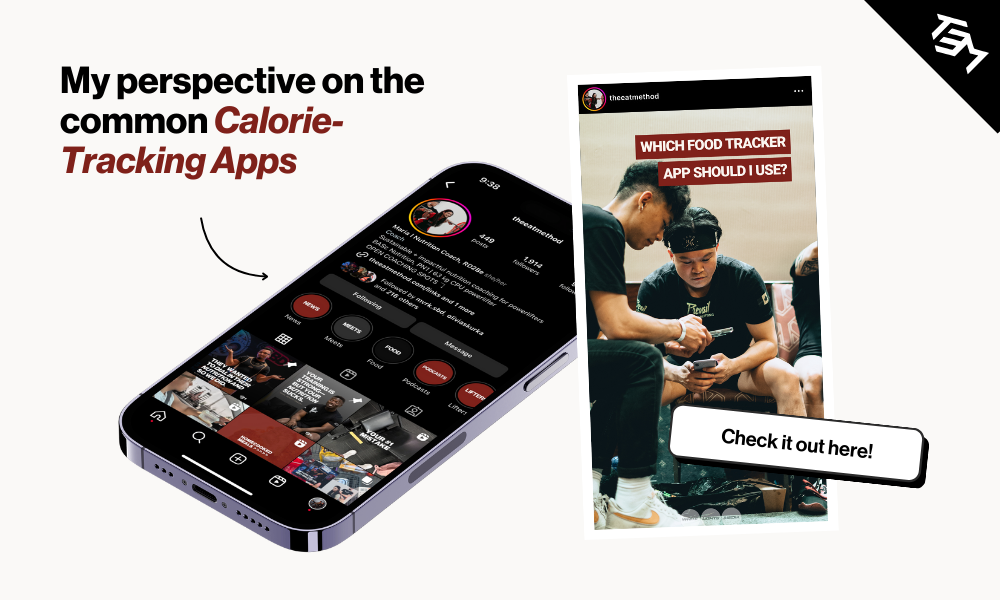
- Nutrition: You have to know what and how you’re eating to understand how to improve it. If you’re new to tracking, don’t stress over perfection. Instead, start with a simple method like food photos or logging basic meals to give you an objective view of your intake. Food photo-centered apps include See How You Eat and the You Ate App. Over time, you can move into more detailed tracking of calories and macronutrients as you get comfortable.
- Body Weight: Monitor your body weight regularly, even if it’s just once a week. This helps gauge whether you’re eating enough, too little, or too much. Remember, body weight fluctuations are normal, and the goal is to identify trends over time rather than obsess over daily changes. For individuals who suspect or have been diagnosed with an eating disorder or disordered eating, please reach out to a Registered Dietitian and your family physician to discuss this topic.
Start small, and build from there. The more data you collect, the more informed and accurate your decisions will be when it comes to adjusting your nutrition.
Don’t Rush to Cut Weight
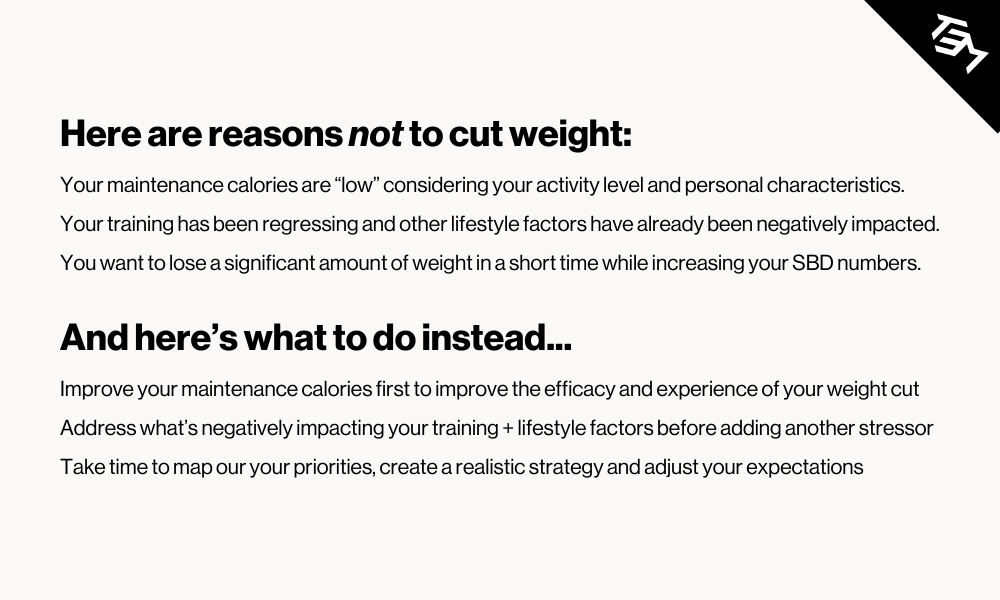
The temptation to cut weight early in your powerlifting journey can be strong, but patience is key. Before considering any body weight manipulation, you need to establish a solid baseline where you’re eating enough and consistently to fuel your training and recovery.
- Cutting weight too soon, before understanding how your body responds to maintenance calories and proper fueling, is like going for a heavy lift without warming up. It increases the risk of burnout, injury, and long-term issues with performance. Believe me, I’ve been there and I’m not alone.
- Consider stabilizing first, the same way you’d want to work on your stability to improve your SBD. Once you’ve established a consistent eating routine at maintenance, you can make more informed and sustainable decisions about whether to cut or bulk and your optimal weight class.
Focus on the Big Picture
It’s easy to get caught up in the minutiae of nutrition—whether you’re eating enough protein per meal, worrying about meal timing, or stressing over supplements. However, these details pale in comparison to the big picture.
- Here are some big picture questions to consider:
- Are you eating enough total protein in the day?
- Are you fueling your workouts with the right amount of carbs?
- Are you recovering well between training sessions?
- Don’t let small details derail you. Prioritize consistency over perfect execution—eating something slightly off-plan is always better than eating nothing at all. It’s common to fret over going over that carb target by 10+ grams, here’s an oldie but goodie swipe post for you.
Optimal nutrition doesn’t mean perfect nutrition. It means finding what works for you and sticking with it long enough to see results.
Play the Long Game
Powerlifting isn’t an endurance sport but it is a marathon, not a sprint. The same goes for your nutrition. It’s easy to get discouraged when you don’t see immediate changes and easy to continue unhelpful habits in pursuit of instant gratification. You’re forgetting about the process though.
Long-term success in the sport comes from building habits that you can stick to over months and years, not weeks. You won’t know how well a nutrition program is until you follow through, as opposed to giving up three weeks later because it “didn’t feel like it was working”. Nutrition changes take time to show results, just like strength training. You won’t truly know how effective your plan is until you’ve followed it consistently for an extended period.
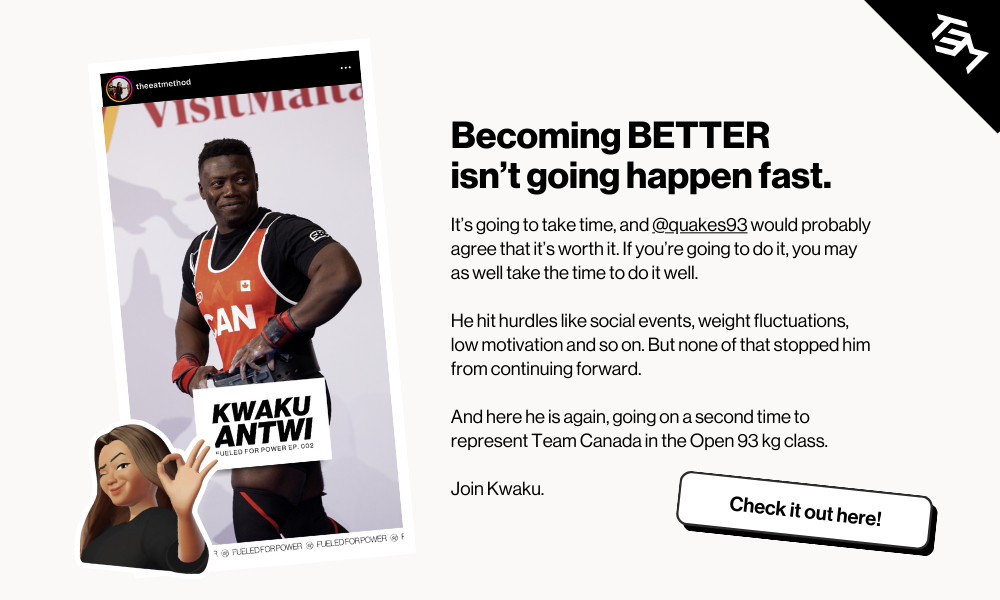
Whether you’re preparing for your first meet or you’re 10 years into the sport, establishing solid nutrition habits will lay the foundation for long-term success. Start with these basics and build from there. Want to go deeper? Work with me at TEM to personalize your nutrition for optimal health and performance.
Be the first to comment